
Building Bridges Across Nations Through Rotary: RICCA Background & History
RICCA stands for the Rotary Inter-Country Committee for ASEAN. It is part of Rotary’s global network of Inter-Country Committees (ICCs), which are designed to strengthen relationships between Rotary clubs and districts across different countries. RICCA ASEAN was established to foster friendship, collaboration, and peacebuilding efforts among Rotary clubs within the ASEAN region. It aligns closely with Rotary International’s mission of promoting international understanding and goodwill.
The foundation of RICCA ASEAN can be traced to Rotary’s Inter-Country Committees, first established in the aftermath of World War II to rebuild trust between nations. In the ASEAN context, this idea took on renewed importance as countries in the region sought closer cooperation amid growing diversity and interdependence. RICCA ASEAN was formed to support this vision, encouraging dialogue, promoting cultural exchange, and creating opportunities for Rotarians to work together in advancing peace and development.
Origins & Purpose
As ASEAN continued to evolve as a regional community, RICCA ASEAN grew alongside it. It became a platform where connections turned into collaboration, enabling Rotarians to share knowledge, respond to regional challenges, and support one another’s initiatives. Through these relationships, a stronger sense of regional identity and solidarity began to take shape, one built not only on policy, but on personal connections and shared service.
Over time, RICCA ASEAN has helped facilitate a wide range of cross-border efforts, from humanitarian projects to leadership and youth development programs. Its growing emphasis on peacebuilding reflects Rotary’s broader mission of conflict prevention and resolution. Initiatives that engage young leaders, such as regional peace programs, highlight the belief that sustainable peace begins at the community level and is strengthened when the next generation is equipped to lead.
Today, RICCA ASEAN continues to serve as a vital bridge across Southeast Asia, connecting people, ideas, and opportunities for collaboration. It stands as a testament to what can be achieved when individuals come together with a shared commitment to service and understanding. In a region shaped by diversity, its work reinforces a simple but powerful truth: that peace is not built alone, but together, through cooperation, trust, and collective action.
Growth in the ASEAN Region
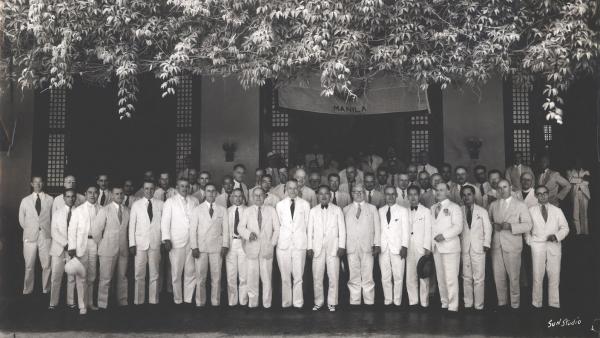
Members of the Rotary Club of Manila, Philippines, before 1942.
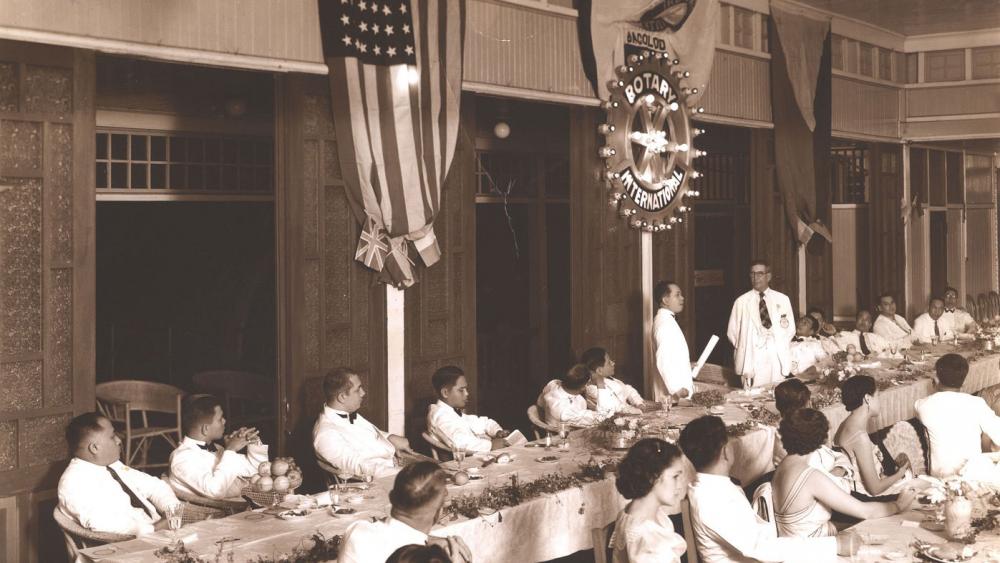

Members and guests attend a charter presentation ceremony for the Rotary Club of Bacolod, Philippines, in January 1938. The club was officially chartered in June 1937.